Last Updated: November 20, 2026
Quick Summary
The best amenities to attract long-term HMO tenants are practical ones that remove daily friction, such as reliable broadband, laundry facilities and adequate storage, rather than decorative extras. Tenants who feel comfortable at home tend to stay longer, so fixing these essentials first reduces costly move-outs and lost rent.
- Reliable broadband, laundry and storage are the essentials tenants use daily and notice when they fail.
- A proper desk, good lighting and lockable doors make bedrooms feel like a real home.
- Statement décor and elaborate smart-home systems rarely change a tenant's decision to stay.
- Fire, gas and electrical safety are obligations, so confirm compliance before spending on comfort.
- Track renewal rates, void days and maintenance requests to judge whether an upgrade is working.
Table of Contents
- Why Amenities Decide Whether HMO Tenants Stay
- Essential Room Features: Best HMO Room Features That Retain Tenants
- Ranking the HMO Amenities Tenants Want Most
- Designing Communal Areas Tenants Actually Use
- High-Impact Versus Low-Impact Amenities Compared
- How to Implement Amenity Upgrades Step by Step
- Keeping Tenants Long Term With Lord Panda Property
- Frequently Asked Questions
Why Amenities Decide Whether HMO Tenants Stay
Amenities are one of the few levers a landlord controls that directly affects whether a professional tenant renews. At Lord Panda Property, we manage HMOs across the South and South West of England, where tenants who feel comfortable at home tend to stay longer, and every move-out costs time, cleaning and lost rent. The best amenities to attract long-term HMO tenants are the practical ones that remove daily friction, not the decorative ones.
Turnover in shared housing is driven by everyday frustrations. A slow connection, a cramped kitchen or a shared bathroom that is never quite clean gives a tenant a reason to look elsewhere at the next renewal. Addressing those points early is usually cheaper than replacing a tenant halfway through a contract.
Essential Room Features: Best HMO Room Features That Retain Tenants
Each bedroom is effectively a tenant's whole home, so the room itself carries the most weight. Professional tenants typically want a bed they can sleep in properly, a desk for working from home, adequate storage for clothes and belongings, and a lock they trust.
We recommend focusing on four room features:
- A proper desk and chair. Many professionals work from their bedroom, so a dedicated workspace matters.
- Storage that fits real belongings. A wardrobe plus a chest of drawers or under-bed storage prevents clutter spreading into shared areas.
- Good lighting. A ceiling light plus bedside lamps makes a room feel larger and more liveable.
- Lockable doors and privacy. Tenants who feel secure in their room are less likely to move on.
Watch out: a room that looks full in photographs but has no usable floor space will feel cramped within a month, and that is a common reason tenants give for leaving.
Ranking the HMO Amenities Tenants Want Most
Not every amenity earns the same return. A useful way to rank them is to score each one on three tests: how often a tenant uses it, how quickly its absence causes frustration, and how directly it influences a renewal decision. Broadband and laundry score highly on all three; décor scores low on all three. That scoring keeps spending honest.
It also helps to segment by tenant group, because a single HMO rarely serves one audience. Professionals working from home prioritise a desk, fast broadband and acoustic privacy. Contractors on longer placements value parking, storage for tools and kit, and a robust laundry setup. Students and recent graduates tend to weigh communal space, social layout and all-inclusive bills more heavily. A house that tries to please all three equally often pleases none, so decide which group the property is genuinely suited to and rank amenities for that group first.
High-Impact Amenities: Broadband, Laundry and Storage
These three amenities appear daily in a tenant's routine and are the ones most likely to trigger a move-out when they fail. Fast, stable broadband supports remote work and streaming across several people sharing one connection; a connection that drops during video calls is a recurring complaint that tenants rarely forgive. Laundry facilities remove a weekly trip to a launderette and reduce the friction that builds when one machine serves too many people. Storage keeps shared spaces usable and stops belongings spilling into communal areas.
If a property lacks any of them, fixing that gap should come before any cosmetic spending. When budgeting, compare the likely cost of the upgrade with the rent uplift, reduced void period or improved renewal rate it could support.
Lower-Impact Extras and Where to Spend Less
Some extras feel generous but rarely change a tenant's decision. Statement furniture, premium décor and elaborate smart-home systems are often admired on viewing and then barely noticed afterwards. Spending heavily on them can leave less budget for the high-impact items above, and smart systems add maintenance and replacement obligations that outlast the novelty.
Where a budget is tight, spend on function first and presentation second. A clean, well-lit room with sound broadband will outperform a showy room with a weak connection. A tiered approach works well: treat broadband, laundry, storage and working appliances as essential; treat a desk, good lighting and a functional kitchen as worthwhile; and treat décor and smart-home extras as premium choices only once the first two tiers are complete. See how amenity choices help avoid void periods.
To judge whether the ranking is working, track renewal rates, average length of stay, void days between tenancies and the volume of maintenance requests. If renewals rise and voids fall after an upgrade, the amenity earned its place; if not, the budget is better redirected.
Designing Communal Areas Tenants Actually Use
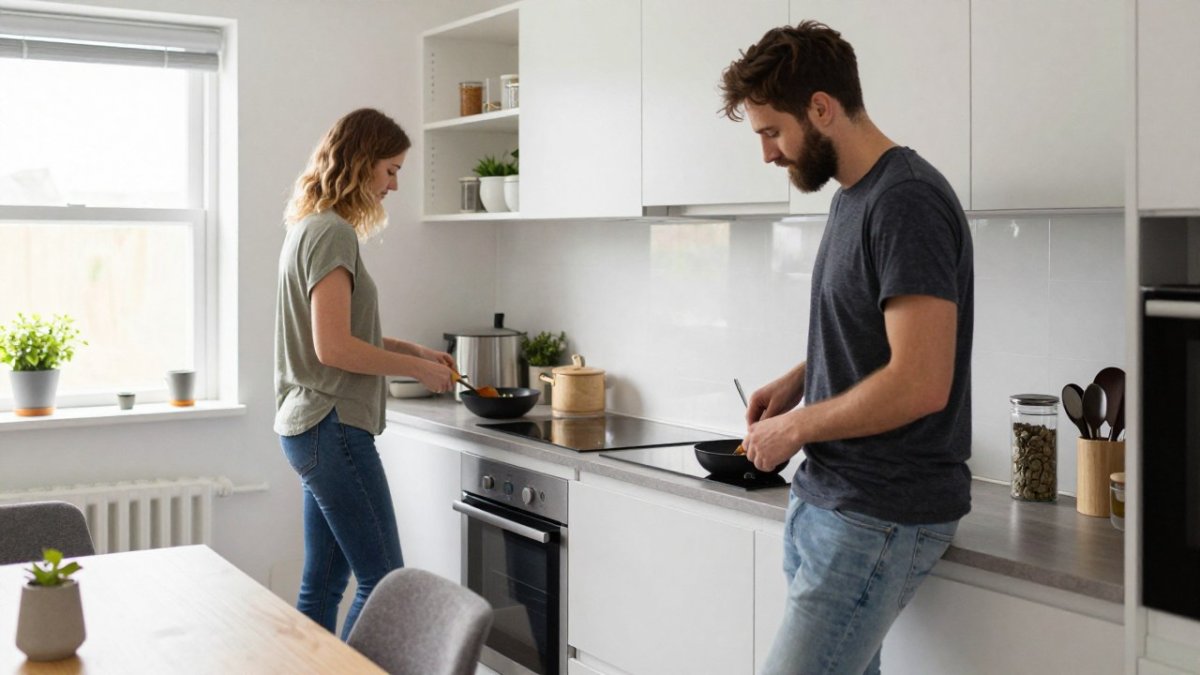
Shared spaces decide how well residents get along. A kitchen with enough counter space, working appliances and a table for several people encourages tenants to eat together rather than retreat to their rooms. A living area with comfortable seating and a reliable TV setup gives people a reason to share it. Bright, tidy shared kitchens with modern appliances are among the most valued features in a house share.
The design gap most landlords miss is the distinction between desirable extras and legal requirements. Fire safety, gas safety, electrical safety and appropriate licensing conditions are obligations, not amenities, and no amount of statement furniture compensates for a non-compliant shared kitchen or an obstructed escape route. Before spending on comfort, confirm that shared facilities meet the relevant safety and licensing standards for the property, and keep certification current. Amenities should be designed and maintained so they do not create hazards: appliances on stable surfaces, ventilation that actually clears cooking moisture, and clear routes through shared areas.
Accessibility and inclusive design are also underused differentiators. Step-free access to shared facilities, lever taps, adequate turning space and well-placed lighting make a property usable by tenants with differing needs and widen the pool of long-term applicants. Acoustic privacy matters just as much: a bedroom next to a shared kitchen or bathroom will generate complaints unless sound insulation, door seals and sensible layout reduce noise transfer. These choices rarely appear in competitor guides but directly affect how long tenants stay.
Communal areas also need clear house rules so that access is fair. Agreeing expectations at the start is far easier than resolving them after tension has built up. Find out how to handle shared-space conflict step by step. Provide clear storage for each resident, make cleaning easy, and set a sensible rota or cleaning arrangement for shared bathrooms, with good ventilation to reduce damp and disputes.
Watch out: cramming extra furniture into a shared living area can block escape routes and breach fire safety expectations, so check layouts before buying.
High-Impact Versus Low-Impact Amenities Compared
The table below summarises where to focus spending.
| Amenity | Impact on Retention | Daily Use | Priority |
|---|---|---|---|
| Reliable broadband | Very high | Constant | Essential |
| Laundry facilities | High | Weekly | Essential |
| Adequate storage | High | Daily | Essential |
| Desk and workspace | High | Daily | Important |
| Functional kitchen | High | Daily | Important |
| Good lighting | Medium | Daily | Important |
| Statement décor | Low | Occasional | Optional |
| Elaborate smart-home systems | Low to medium | Occasional | Optional |
How to Implement Amenity Upgrades Step by Step
Follow this sequence to avoid wasting budget on the wrong items.
- Audit the current property. List each room and shared area, and note which of the essential amenities are missing or in poor condition.
- Fix the essentials first. Address broadband, laundry, storage and working appliances before anything else.
- Improve the bedrooms. Add a desk, improve lighting and check locks and privacy.
- Upgrade the communal areas. Make the kitchen and living space functional, then add comfort.
- Set house rules. Agree cleaning arrangements and shared-space expectations with tenants.
- Review after each tenancy. Ask departing tenants what they valued and what frustrated them, then adjust.
Keeping Tenants Long Term With Lord Panda Property
Attracting good tenants is only half the job; keeping them is where income stability comes from. Lord Panda Property takes on the day-to-day running of HMOs across the South and South West of England, covering tenant management, maintenance and compliance on a long-term arrangement. Lord Panda Property takes on the day-to-day running of HMOs on a long-term arrangement, and you can book a consultation to see how it would apply to your property.
Customers have told us what this means in practice. One landlord said, "Taking this service has meant I'm free to focus on the areas of life I need to, it's been a lifesaver." Another noted, "Lord Panda demonstrated professionalism and integrity from our very first dealing."
Keeping amenities in good repair is part of that work. If you want to understand more about why tenants leave early and how to prevent it, read why HMO tenants leave early and how to stop it.
Frequently Asked Questions
What amenities do HMO tenants value most?
Long-term HMO tenants tend to value reliable high-speed broadband, a clean and well-equipped kitchen, a washing machine and tumble dryer, and a comfortable bedroom with good storage. Privacy in the bedroom and a sense that the property is well maintained also matter. Ask current tenants or prospective viewers which of these matters most in your property, since priorities vary with the tenant group you attract. Pricing for upgrades depends on the work involved, so request a quote for your specific property.
Do HMO tenants prefer an en-suite room or shared facilities?
Many tenants, particularly professionals, prefer a room with a private or en-suite bathroom because it offers privacy and reduces friction over shared bathroom use. Shared facilities can still work well when the bathrooms are clean, well ventilated and sensibly scheduled. Where you have the layout to offer both, a mix of room types can appeal to a wider pool of long-term tenants. Speak to Lord Panda Property for guidance on which configuration suits your property.
How can landlords find out which amenities their HMO tenants want?
The most practical approach is to ask. Include a short questionnaire at check-in or during a routine inspection, and note recurring complaints about broadband, storage or kitchen space. Track which rooms take longest to let and which tenants stay longest, then compare the features of each. Over time these signals show where upgrades will improve retention most, and they help you decide where extra spending is unnecessary.
How can I make an HMO more attractive to long-term tenants?
Focus on the features tenants notice on viewing and then live with daily: a furnished, well-proportioned bedroom, fast and reliable Wi-Fi, a functional kitchen, laundry facilities and a clean, well-maintained communal area. Prompt repairs and clear house rules that apply fairly to everyone also help tenants stay. For landlords who prefer not to manage this themselves, Lord Panda Property offers a long-term arrangement covering tenant management and maintenance.
