Table of Contents
- What Is an HMO and Who Needs a Licence
- HMO Planning Permission vs Licensing 2026: Key Differences
- HMO Licence Application Process: A Step-by-Step Walkthrough
- Property Standards Every HMO Landlord Must Meet
- HMO Fire Safety Regulations UK: What Landlords Must Provide
- HMO Licensing Compliance: Consequences of Getting It Wrong
- Pre-Inspection Checklist and Regional Variations for South West Properties
- How Full HMO Licensing Compliance Gets Managed for You
Last Updated: August 24, 2026
What Is an HMO and Who Needs a Licence
A House in Multiple Occupation (HMO) is a property rented by three or more people from more than one household who share facilities such as a kitchen or bathroom. This definition, established under the Housing Act 2004 guidance for landlords, is the starting point for every landlord understanding their legal position.
HMO licensing compliance is not optional, and penalties for non-compliance are severe. At Lord Panda Property, we work with landlords across the South and South West of England navigating this complexity. This guide covers licensing, planning, fire safety, and property standards, plus a practical pre-inspection checklist and the costs of non-compliance.
Mandatory Licensing: The Five-Person Threshold
Mandatory licensing applies to any HMO occupied by five or more people from two or more separate households sharing facilities. Every landlord meeting this threshold must hold a valid HMO licence issued by their local housing authority before tenants move in. Operating without one is a criminal offence.
Additional and Selective Licensing Schemes
Local councils can extend licensing requirements beyond the mandatory threshold through additional licensing (typically covering three or four occupants where management is poor) and selective licensing (applying to all privately rented properties in a designated area). Councils in Somerset, Devon, Dorset, and Cornwall have implemented or reviewed such schemes, so landlords must check their specific local housing authority's current position.
HMO Planning Permission vs Licensing 2026: Key Differences
Planning permission and licensing are entirely separate legal requirements. An HMO licence is a regulatory permission issued by the local housing authority under the Housing Act 2004 governing property management and maintenance. Planning permission, granted by the local planning authority, governs change of use. A landlord can hold a valid HMO licence and still breach planning law, or vice versa.
When Change of Use and Sui Generis Apply
For smaller HMOs occupied by three to six people, a property typically falls within Use Class C4. Conversion from a standard dwelling house (C3) to a small HMO (C4) is often permitted development requiring no formal planning application. However, many South West councils have removed permitted development rights through Article 4 Directions, requiring planning permission even for small HMOs.
Larger HMOs occupied by seven or more people are classified as sui generis, meaning "of its own kind," and always require a formal planning application for change of use. Landlords with properties at this scale should obtain written confirmation of their planning position before any licensing application.
HMO Licence Application Process: A Step-by-Step Walkthrough
The HMO licence application process follows a broadly consistent structure across councils, though fees, timescales, and specific document requirements vary by local authority.

Step 1: Confirm your licensing category. Establish whether your property falls under mandatory, additional, or selective licensing. Contact your local housing authority if unsure.
Step 2: Prepare your supporting documents. A standard application requires a current Gas Safety Certificate, an Electrical Installation Condition Report (EICR), an Energy Performance Certificate (EPC), a floor plan, and a copy of your tenancy agreement template.
Step 3: Complete the fit and proper person assessment. This formal declaration covers your character and history as a landlord.
Step 4: Submit the application and pay the fee. Applications are typically submitted via the council's online portal or by post.
Step 5: Property inspection. Most councils inspect the property before granting a licence. Ensure the property meets all amenity and safety standards before scheduling.
Step 6: Receive the licence and note conditions. A licence is typically granted for up to five years and includes specific conditions relating to management, occupancy, and safety.
Fit and Proper Person Assessment
The fit and proper person test is a statutory requirement under the Housing Act 2004. The assessment considers unspent criminal convictions (particularly fraud, dishonesty, violence, or sexual offences), previous breaches of landlord obligations, unlawful discrimination findings, or licence revocations by any local housing authority. Failure means the application is refused.
Licensing Fees, Renewal and Conditions
Licensing fees are set by each local housing authority and vary considerably across the South West. Fees are generally structured as an application fee paid upfront and a grant fee when the licence is issued. Licences last up to five years, after which renewal is required. Conditions attached to a licence are legally binding and typically cover maximum occupancy, management standards, maintenance, and fire safety. Breach of licence conditions is a separate offence.
Property Standards Every HMO Landlord Must Meet
HMO standards are legally enforceable requirements assessed against the Housing Health and Safety Rating System (HHSRS), a risk-based framework identifying hazards in residential properties.
Room Size Legislation and Amenity Standards
Room size legislation for HMOs was tightened nationally in 2018. The minimum floor area for a room used as sleeping accommodation by one adult is 6.51 square metres. For two adults sharing, the minimum is 10.22 square metres. Rooms used by children under ten must be at least 4.64 square metres. Any room below these thresholds cannot lawfully be used as a bedroom in a licensed HMO.
Amenity standards cover the ratio of bathrooms, toilets, and kitchen facilities to occupants. Local authorities set their own standards within national guidance, so requirements vary by council. Request the specific amenity schedule from your local housing authority as part of the application process.
Gas, Electrical and Energy Performance Certificates
Three certificates underpin HMO legal compliance:
- Gas Safety Certificate: Required annually under the Gas Safety (Installation and Use) Regulations 1998. A copy must be provided to tenants within 28 days of inspection.
- Electrical Installation Condition Report (EICR): Required at least every five years for HMOs under the Electrical Safety Standards in the Private Rented Sector (England) Regulations 2020. A new EICR is required before a new tenancy begins.
- Energy Performance Certificate (EPC): Required for all rented properties. Under the Minimum Energy Efficiency Standards (MEES), a property must achieve at least an EPC rating of E to be legally let.
Failure to hold valid, current versions of all three certificates is a breach of statutory requirements and grounds for enforcement action.
HMO Fire Safety Regulations UK: What Landlords Must Provide
Fire safety in HMOs is governed by the Housing Act 2004, the Regulatory Reform (Fire Safety) Order 2005, and local authority licence conditions. Requirements are more stringent than for single-let properties, reflecting the higher risk profile of shared accommodation.
Every HMO landlord must carry out or commission a fire risk assessment identifying hazards, evaluating risk to occupants, and specifying measures to reduce that risk. The assessment must be reviewed regularly and whenever significant changes are made to the property or occupancy.
Specific provisions most local authorities require include:
- Interlinked, mains-wired smoke alarms on every floor
- Heat detectors in kitchens
- Carbon monoxide detectors in rooms with combustion appliances
- Fire doors with self-closing mechanisms on all habitable rooms and communal areas
- Clearly marked and unobstructed escape routes
- Fire blankets and, in larger properties, fire extinguishers in communal kitchens
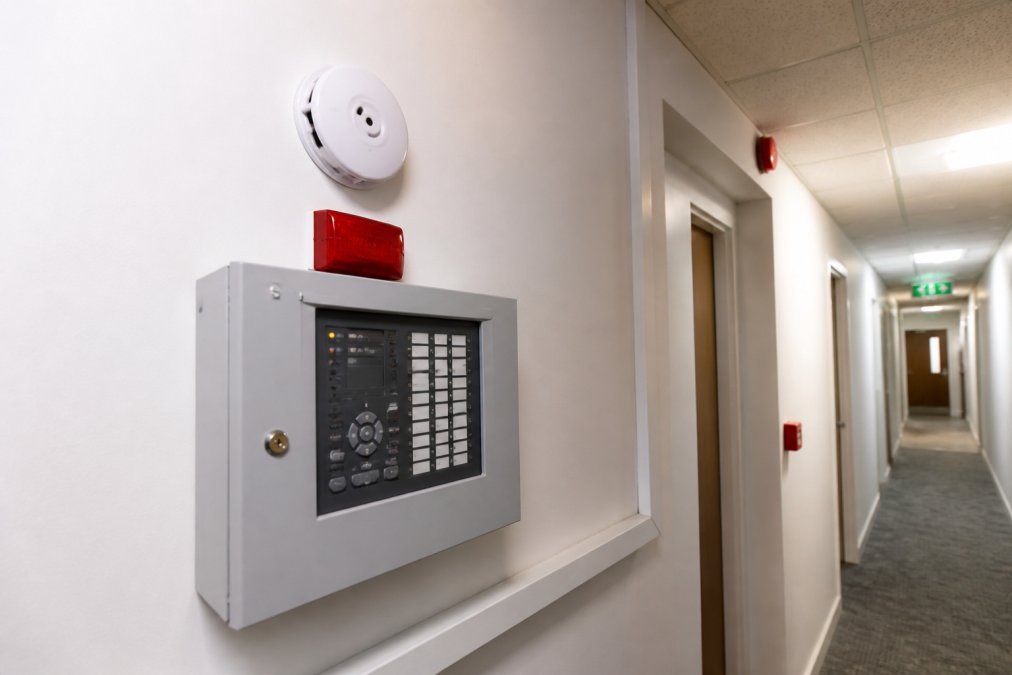
As documented in The Regulatory Reform (Fire Safety) Order 2005, the responsible person for a non-domestic or shared premises must take general fire precautions to ensure occupant safety.
HMO Licensing Compliance: Consequences of Getting It Wrong
Operating an unlicensed HMO is a criminal offence under the Housing Act 2004. Local housing authorities can issue a Civil Penalty Notice of up to £30,000 per offence as an alternative to prosecution. Where a case goes to magistrates' court, there is no upper limit on the fine. A landlord convicted of operating without a licence automatically fails the fit and proper person test, affecting their ability to hold any HMO licence in future.
A Rent Repayment Order is a further risk. Tenants or the local housing authority can apply to the First-tier Tribunal for a rent repayment order requiring the landlord to repay up to 12 months' rent, even if tenants were aware the property was unlicensed.
An unlicensed landlord cannot serve a valid Section 21 notice to recover possession. This means a landlord who has failed to licence can find themselves unable to end a tenancy through the standard no-fault route.
Pre-Inspection Checklist and Regional Variations for South West Properties
Most councils inspect an HMO before granting a licence. A failed inspection delays the process, sometimes by months. This checklist covers areas most commonly flagged during property inspections across the South West.
| Area | What Inspectors Check | Action Required |
|---|---|---|
| Room sizes | Floor area meets minimum thresholds | Measure and document all rooms |
| Fire safety | Alarms, detectors, fire doors, escape routes | Commission fire risk assessment |
| Gas safety | Valid certificate, appliance condition | Book annual service before inspection |
| Electrical safety | Valid EICR, consumer unit condition | Arrange EICR if over five years old |
| Amenity standards | Bathroom and kitchen ratios | Cross-reference local authority schedule |
| Management | Tenancy agreements, house rules | Prepare standard documentation |
| EPC rating | Minimum E rating | Commission EPC if expired or absent |
Regional variation is a real factor. Bristol City Council has historically been one of the most active enforcement authorities in the South West, with a well-established additional licensing scheme. Plymouth City Council has its own amenity standards differing from neighbouring Devon. Somerset Council, formed from the merger of district councils in 2023, is consolidating its approach to HMO enforcement. Cornwall Council operates across a large, geographically dispersed area.
Do not assume that what was acceptable in one part of the region will satisfy another council. Always request the current amenity standards and licence conditions document from the specific local housing authority for each property.
According to the Local Government Association's guidance on HMO licensing, variation in how councils implement additional and selective licensing schemes means landlords with properties across multiple local authority areas face genuinely different compliance environments.
How Full HMO Licensing Compliance Gets Managed for You
Managing HMO licensing compliance across a portfolio requires tracking licence renewal dates, maintaining valid certificates, responding to changes in local authority schemes, keeping fire safety provisions current, and ensuring every tenancy agreement meets statutory requirements. For a landlord with five properties across three council areas, the administrative overhead is substantial.
Lord Panda Property takes on the entire compliance burden through a long-term lease arrangement. Rather than acting as a traditional letting agent, Lord Panda Property leases your property directly, taking full legal responsibility for licensing, maintenance, safety certificates, and tenant management. You receive a guaranteed fixed monthly income regardless of occupancy, with no void periods.
This model works particularly well for portfolio landlords with HMOs across different towns in the South West, where variation in council schemes makes self-management complex. It also suits retiring landlords who want to preserve capital value without operational demands.
As the National Residential Landlords Association's guidance on HMO management makes clear, the legislative environment for HMO landlords has become significantly more demanding. The combination of mandatory licensing, additional and selective schemes, room size legislation, EICR requirements, and fire safety obligations creates a compliance matrix requiring consistent, professional oversight.
The landlords who struggle most treat compliance as a one-time task rather than an ongoing obligation. A licence issued five years ago does not mean the property is compliant today. Regulations change, local authority schemes expand, and certificate renewal dates arrive whether or not a landlord is paying attention.
Frequently Asked Questions
Do landlords need an HMO licence?
Any landlord renting a property to five or more people from two or more separate households, who share facilities such as a kitchen or bathroom, must hold a mandatory HMO licence under the Housing Act 2004. Smaller shared properties may still require a licence if the local authority operates an additional or selective licensing scheme. Operating without a licence is a criminal offence and can result in an unlimited fine or a civil penalty notice of up to £30,000.
Which properties are exempt from mandatory HMO licensing?
Properties occupied by fewer than five people, or where all occupants form a single household, fall outside mandatory licensing. Purpose-built self-contained flats in blocks of three or more storeys may also be exempt in certain circumstances. However, local authorities across the South West run additional licensing schemes that capture smaller shared accommodation, so landlords should check with their specific local housing authority before assuming a property is exempt from any form of HMO licensing compliance.
How does HMO planning permission differ from an HMO licence?
An HMO licence is issued by the local housing authority and governs the safety and management standards of the property. Planning permission, by contrast, is required when changing a property's use class. Converting a standard dwelling to a smaller HMO (Use Class C4) often falls under permitted development, but properties housing seven or more people become sui generis and require explicit planning permission. Both processes can run simultaneously but are assessed by different departments under different legislation.
What are the legal consequences of operating an unlicensed HMO?
Landlords operating an unlicensed HMO face prosecution under the Housing Act 2004, carrying an unlimited fine. Local authorities can also issue a civil penalty notice of up to £30,000 per offence. Tenants have the right to apply for a Rent Repayment Order, recovering up to 12 months of rent paid during the unlicensed period. The local housing authority can also pursue enforcement action and, in serious cases, apply for a management order, removing the landlord's control of the property entirely.
What fire safety requirements apply to HMOs?
HMO fire safety regulations require landlords to carry out a fire risk assessment and act on its findings. At minimum, properties must have interlinked smoke alarms on every floor, heat detectors in kitchens, and fire doors with self-closing mechanisms on all habitable rooms. Emergency lighting, fire escape signage, and fire-fighting equipment such as extinguishers or fire blankets are typically required in larger properties. Licence conditions set by the local housing authority will specify the exact standard based on the property's size and layout.
What are the current compliance rules for HMO landlords?
HMO landlords must hold a valid licence, meet room size legislation (minimum 6.51 square metres for a single adult), maintain a current gas safety certificate, an Electrical Installation Condition Report renewed every five years, and a valid Energy Performance Certificate. The property must pass a Housing Health and Safety Rating System inspection, and landlords must satisfy the fit and proper person test. Licence conditions also govern tenancy agreements, property management standards, and the frequency of compliance audits.
Can one provider manage HMO licensing compliance across multiple properties?
Yes. A specialist HMO management provider can handle licensing, safety certificates, property inspections, and licence renewal across a portfolio of properties, including those spread across different local authority areas in the South West. This removes the burden of tracking different renewal dates, fee schedules, and local scheme variations from the landlord. Lord Panda Property manages full compliance across portfolios, giving landlords predictable income and regulatory peace of mind without the day-to-day operational burden.
HMO licensing compliance is genuinely complex, and the cost of getting it wrong, financially and legally, is significant. Lord Panda Property provides guaranteed monthly income, full compliance management including licensing, safety certificates, and maintenance, and long-term lease contracts that remove the operational burden entirely. Book a consultation with Lord Panda Property to find out what a fixed monthly income and complete peace of mind looks like for your portfolio.
This article was written using GrandRanker