Table of Contents
- Understanding 2026 Compliance Standards for Rental Properties
- HMO Compliance Requirements You Need to Meet
- Building Your Rental Property Compliance Checklist
- Organising Landlord Compliance Documents and Records
- Establishing a Rental Property Inspection Schedule
- Common Compliance Challenges and How to Address Them
- Why Professional Management Simplifies Compliance
- Frequently Asked Questions
Last Updated: 19 October 2026
Understanding 2026 Compliance Standards for Rental Properties
Rental property compliance isn't optional anymore, it's the foundation of running a legal, profitable HMO operation. The regulatory landscape has tightened significantly, and landlords who ignore these requirements face penalties, tenant disputes, and potential loss of their operating licence.
The 2026 compliance standards cover everything from safety certifications to tenant documentation. Your property must meet fire safety regulations, electrical safety standards, and gas safety requirements. You'll also need proper licensing, insurance, and detailed records of all maintenance work.
What makes this challenging is the sheer volume of requirements. Between HMO licensing rules, building regulations, and tenant protection laws, there's a lot to track. Most landlords find that staying on top of compliance takes significant time and attention to detail.
Here's what you need to know: preparing your rental property properly protects your investment and your tenants. It also eliminates the stress of regulatory inspections and potential enforcement action.
HMO Compliance Requirements You Need to Meet
HMO licensing is the starting point for rental property compliance. Your property must be licensed if it's occupied by more than a certain number of unrelated tenants (Private renting: Houses in multiple occupation). The specific threshold depends on the number of storeys and occupancy levels.
To get and keep your HMO licence, you'll need to meet several core requirements:
- Fire safety equipment: Working smoke alarms on every level, emergency lighting, and fire extinguishers
- Electrical safety: Annual electrical installation condition reports from a qualified electrician
- Gas safety: Annual gas safety certificates from a registered engineer
- Water safety: Legionella risk assessments and proper water temperature controls
- Structural standards: Adequate room sizes, proper ventilation, and accessible amenities
- Management standards: A named person responsible for day-to-day management and emergency procedures
Each of these areas requires documentation and regular updates. Your electrical certificates must be current, your gas safety certificates renewed annually, and your fire safety equipment tested regularly.
The penalty for non-compliance is severe. Local authorities can serve improvement notices, suspend your licence, or prosecute you. Tenants can also pursue claims if you fail to meet safety standards.
Building Your Rental Property Compliance Checklist
A structured checklist is your best defence against missing critical compliance tasks. It forces you to think through every requirement systematically and ensures nothing slips through the cracks.
Your rental property compliance checklist should include:
| Compliance Area | Frequency | Responsibility | Status |
|---|---|---|---|
| Gas safety certificate | Annual | Registered engineer | ☐ |
| Electrical safety report | Annual | Qualified electrician | ☐ |
| Fire risk assessment | Annual | Competent person | ☐ |
| Smoke alarm testing | Monthly | Property manager | ☐ |
| HMO licence renewal | Every 5 years | Landlord/agent | ☐ |
| Tenancy agreements | Per tenancy | Landlord/solicitor | ☐ |
| Right to rent checks | Per tenant | Landlord/agent | ☐ |
| Deposit protection | Per tenancy | Landlord/agent | ☐ |
| Legionella assessment | Annual | Competent person | ☐ |
| Furniture safety checks | Annual | Property manager | ☐ |
Start by listing every task your property requires. Then assign responsibility, either to yourself, your letting agent, or a specialist contractor. Set reminders for renewal dates so nothing expires unnoticed.
Many landlords use a shared spreadsheet or property management software to track these items. The key is making it visible and updating it regularly. When tasks pile up or get forgotten, compliance starts to fail.
Organising Landlord Compliance Documents and Records
Documentation is where most landlords struggle. Compliance isn't just about doing the work, it's about proving you did it when an inspector arrives or a dispute occurs.
You need to keep records of:
- Gas safety certificates (current and previous 5 years)
- Electrical installation condition reports
- Fire risk assessments and remedial work
- Smoke alarm test logs
- Maintenance and repair records
- Tenancy agreements and right to rent checks
- Deposit protection confirmations
- Insurance certificates
- HMO licence documentation
- Legionella assessments
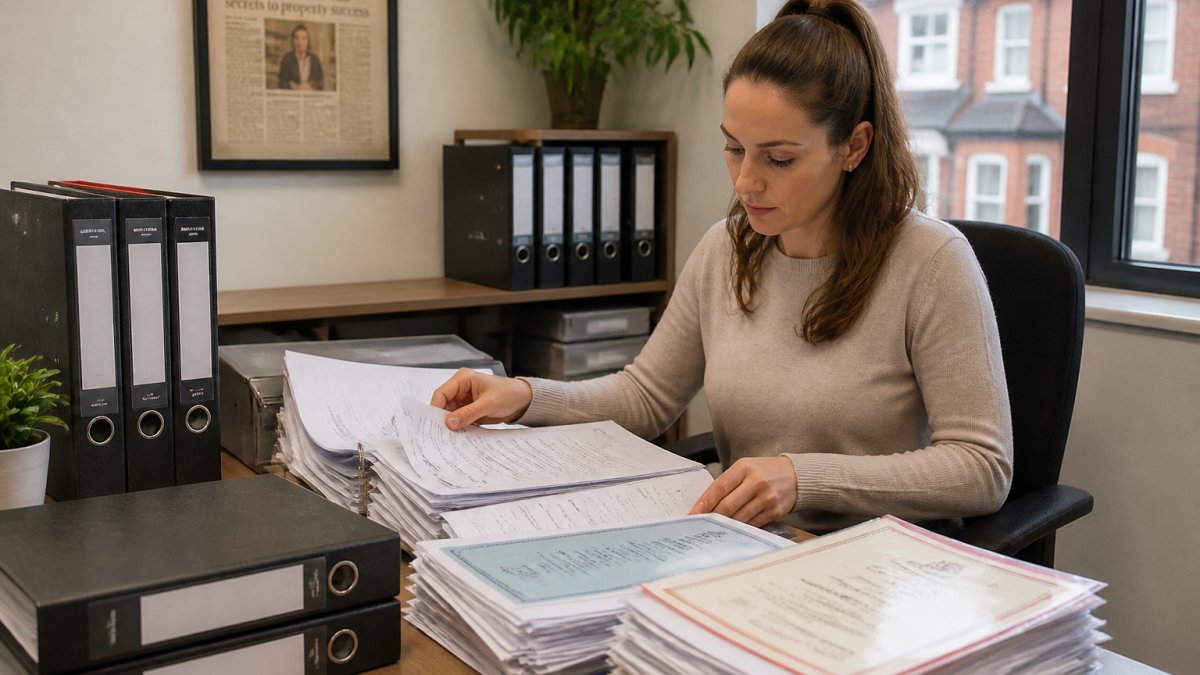
The best approach is to create a simple filing system, either physical or digital. Many landlords use cloud storage with folders for each certificate type and year. This makes it easy to retrieve documents during inspections or if disputes arise.
Digital storage has a major advantage: you can access documents from anywhere, and there's no risk of losing physical paperwork. Use a system that's easy to navigate. Label files clearly with dates and property addresses.
Keep certificates for at least 5 years. Some documents, like tenancy agreements, should be kept for the full duration of the tenancy plus 6 years after it ends.
Establishing a Rental Property Inspection Schedule
Regular inspections catch problems early, before they become compliance issues. An inspection schedule keeps your property safe and your rental property compliance on track.
Schedule inspections quarterly at minimum. During each visit, check:
- Smoke alarms (test them)
- Fire extinguishers and emergency lighting
- Electrical outlets and appliances
- Gas appliances and boiler condition
- Plumbing and water systems
- Structural damage or damp
- Cleanliness and general maintenance
- Tenant behaviour and lease compliance
Document every inspection with photos and written notes. If you find issues, record what needs fixing and when it was fixed. This creates a clear audit trail.
Many landlords hire professional property inspectors to conduct thorough assessments annually. They provide detailed reports and identify risks you might miss. This is particularly valuable if you own multiple properties or live far from your rental.
The cost of regular inspections is far less than the cost of emergency repairs or compliance violations. Plus, tenants know the property is being monitored, which encourages them to maintain it properly.
Common Compliance Challenges and How to Address Them
Most landlords face similar obstacles when managing rental property compliance. Knowing what these challenges are, and how to solve them, saves time and stress.
Challenge: Keeping track of multiple renewal dates
When you own several properties, remembering which certificates expire when becomes overwhelming. You might miss a gas safety deadline or forget to renew your HMO licence on time.
Solution: Use a centralised tracking system. A spreadsheet, calendar app, or property management software can send automatic reminders. Set alerts 60 days before any deadline.
Challenge: Finding qualified contractors
Not all electricians or gas engineers are registered with the right bodies. Hiring an unqualified person puts you at legal risk and means the work doesn't meet compliance standards.
Solution: Always ask for proof of registration before hiring. Check the Gas Safe Register for gas engineers and the NICEIC or NAPIT databases for electricians. Get quotes from multiple contractors to compare prices and availability.
Challenge: Managing tenant communication around inspections
Tenants sometimes resist inspections or don't provide access. This delays compliance work and creates friction.
Solution: Give proper notice (usually 24 hours) and explain why the inspection is necessary. Frame it as protecting their safety. If a tenant refuses access, this is a breach of their tenancy agreement and can be grounds for eviction.
Challenge: Staying updated on regulatory changes
Regulations change, and what was compliant last year might not be this year. Missing an update means you're inadvertently breaking the law.
Solution: Subscribe to updates from your local authority and professional landlord organisations. Check the government's official guidance regularly. Consider joining a landlord association that provides regulatory updates.
Why Professional Management Simplifies Compliance
Managing rental property compliance alone is possible, but it's time-consuming and error-prone. This is where professional management makes a real difference.
A property management company handles all compliance tasks systematically. They maintain the inspection schedules, book contractors, collect certificates, and store documentation. They know the regulations inside out and stay updated when rules change.
The owner of Lord Panda Property was featured in a property investment article in The Times, highlighting how professional management protects long-term asset value. That's because compliance isn't just about avoiding penalties, it's about maintaining your property's condition and rental appeal.
With professional management, you get:
- Systematic tracking of all compliance deadlines
- Direct relationships with qualified contractors
- Proper documentation and record storage
- Immediate response to safety issues
- Peace of mind that your property meets all standards
For landlords with multiple properties, professional management becomes essential. You simply can't manage compliance across several locations without dedicated systems and expertise.
For busy professionals, the time savings alone justify the investment. Instead of spending hours tracking certificates and organising inspections, you receive regular compliance reports and know everything is handled.
Lord Panda Property takes full responsibility for rental property compliance as part of its comprehensive management service. This means you don't have to worry about missing deadlines, finding contractors, or storing documents. Everything is managed professionally, leaving you free to focus on other priorities.
Frequently Asked Questions
What compliance checks should landlords complete before 2026?
Before 2026, landlords must ensure gas safety certificates are current (annual requirement), electrical installations are tested and certified, fire safety equipment is installed and maintained, and any asbestos surveys are completed where the property was built before 2000. For HMO properties, you'll also need current HMO licences and proof that all mandatory fire safety standards are met. A professional survey can identify which checks apply to your specific property.
What should a rental property compliance checklist include?
Your checklist should cover gas safety certification, electrical testing records, fire safety equipment and signage, water hygiene checks, damp and mould inspections, pest control treatments, electrical installation condition reports, and proof of any required HMO licensing. Include dates when each item is due for renewal and assign responsibility for completion. Regular review ensures nothing falls through the gaps, particularly important for portfolio landlords managing multiple properties.
How often should landlords review their rental property inspection schedule?
Review your inspection schedule at least quarterly, or whenever regulations change. Gas safety checks must happen annually, electrical inspections every five years, and fire safety equipment monthly. HMO properties may require more frequent checks depending on your local authority. Keeping a rolling schedule prevents missed deadlines and helps identify maintenance issues before they become compliance problems.
Can a property manager help landlords manage compliance responsibilities?
Yes. Professional property managers handle all compliance tasks: arranging inspections, maintaining documentation, tracking renewal dates, and ensuring standards are met. This eliminates the administrative burden and reduces the risk of overlooking critical deadlines. For busy professionals and portfolio landlords, outsourcing compliance management provides peace of mind and protects your asset value.
Compliance doesn't have to be stressful. With the right systems and support, it becomes routine. Start by building your checklist, organising your documents, and scheduling regular inspections. If managing it alone feels overwhelming, professional management removes the burden entirely while protecting your investment and your tenants.