Table of Contents
- Why HMO Fire Safety Compliance Matters More Than Ever in 2026
- 1. Complete a Thorough HMO Fire Risk Assessment
- 2. Meet All HMO Fire Alarm Requirements
- 3. Install and Maintain Compliant Fire Doors
- 4. Work Through a Room-by-Room HMO Fire Safety Checklist
- 5. Keep Escape Routes Clear and Protect Communal Areas
- 6. Document Everything: Records, Certificates and Tenant Communication
- 7. Review and Update Your Fire Safety Measures Every Year
- Letting a Partner Handle HMO Fire Safety Compliance
- Frequently Asked Questions
Last Updated: October 13, 2026
Why HMO Fire Safety Compliance Matters More Than Ever in 2026
Fire safety is the one part of HMO management you cannot get wrong. A house in multiple occupation is a shared home, often with several unrelated tenants, and that makes it a higher-risk building than a standard let.
The rules are clear, and councils are checking. The government's fire safety guidance for rented homes sets out what landlords must do to keep tenants safe and stay on the right side of the law.
That is why we wrote this guide. Below, we break down seven practical steps to get your HMO fire safety in order, from the risk assessment to the yearly review. Most of it is straightforward once you know what to look for. Here is what matters most.
1. Complete a Thorough HMO Fire Risk Assessment
An HMO fire risk assessment is a written review of your property that finds fire hazards, scores the risk, and records the action needed to fix it. Every shared house needs one, and it must be reviewed regularly.
A common mistake is treating the assessment as a tick-box job. The real value comes from acting on what it finds. Walk the building room by room and look for:
- Blocked escape routes or locked exits
- Faulty alarms, or missing smoke and heat detectors
- Damaged fire doors that no longer close properly
- Overloaded sockets and trailing cables
- Flammable items stored near heat sources
Who Can Carry Out an HMO Fire Risk Assessment?
The assessment must be done by a competent person. That means someone with the knowledge and experience to spot fire risks and judge how serious they are.
You can do it yourself if you genuinely understand fire safety. But for most landlords, paying a qualified assessor is money well spent. They spot things you would miss, and their report stands up if a council officer comes calling.
2. Meet All HMO Fire Alarm Requirements
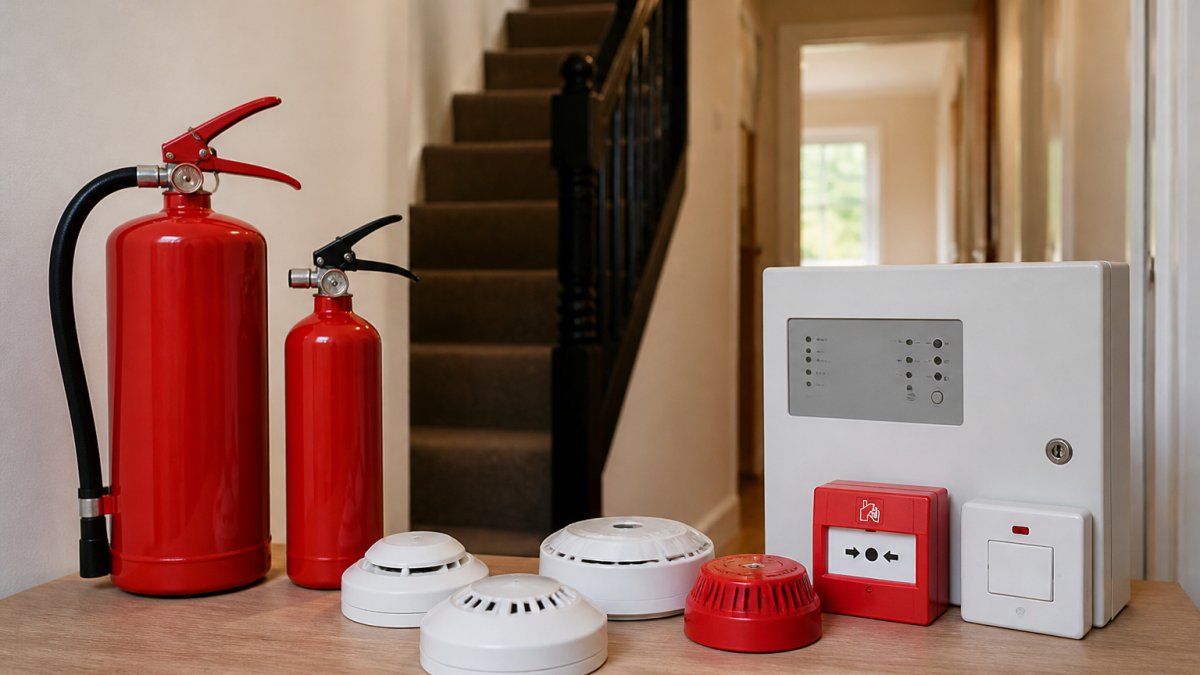
HMO fire alarm requirements depend on the size and layout of the building. The bigger the property and the more floors it has, the more your system has to do.
Get this wrong and you are putting lives at risk. Get it right and you have the single most important safety measure in place. The LGA fire safety in purpose-built blocks guide is a useful reference for how alarm systems should be set up.
Grades and Categories Explained Simply
Fire alarm systems are graded by how much protection they give. Here is a simple way to think about it:
| System Type | What It Covers | Typical Use |
|---|---|---|
| Mains smoke alarms | Individual rooms | Small, simple HMOs |
| Mains with heat detection | Rooms plus kitchen | Shared kitchens |
| Linked system | Whole building | Larger, multi-floor HMOs |
The key point: alarms must be interlinked so a fire in one room sets off every alarm. Tenants asleep on the top floor need to hear a fire starting in the basement kitchen.
3. Install and Maintain Compliant Fire Doors
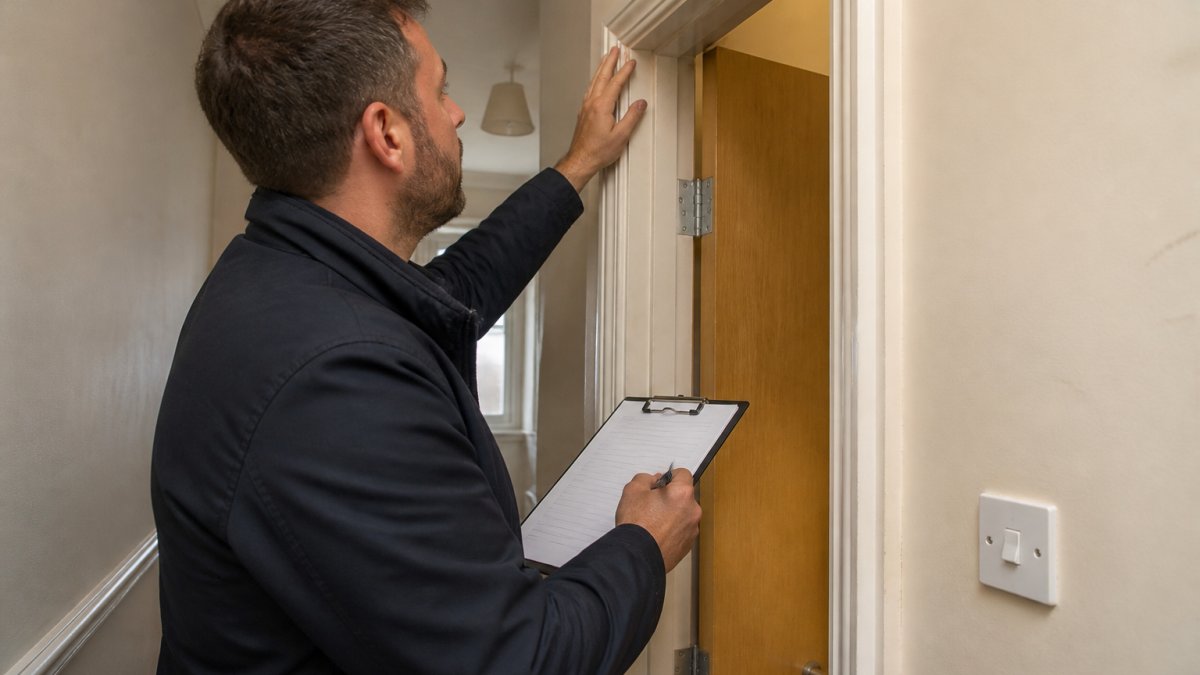
Fire doors are the most misunderstood part of HMO fire safety. A door that looks fine can fail completely in a fire if it is not fitted and maintained correctly.
A fire door is a door designed to hold back fire and smoke for a set period, giving tenants time to escape. It only works if it closes fully, seals tightly, and is never wedged open.
Self-Closers, Intumescent Strips and Common Failures
Three parts make a fire door work:
- Self-closers pull the door shut automatically
- Intumescent strips expand in heat to seal the gap around the door
- Smoke seals stop smoke passing through before the fire arrives
The most common failure is a door wedged open with a fire extinguisher or a chair. Tenants do it to move furniture or let air through. It defeats the entire purpose.
4. Work Through a Room-by-Room HMO Fire Safety Checklist
A checklist turns a vague worry into a clear plan. Go through each room and shared space, and confirm the basics are covered.
Here is an HMO fire safety checklist:
- Smoke alarms fitted in every bedroom and shared hallway
- Heat alarm fitted in the kitchen
- Fire doors fitted to bedrooms and communal areas
- Fire extinguishers in shared kitchens and hallways
- Emergency lighting on escape routes
- Clear, unobstructed escape routes on every floor
- Fire action notices displayed in shared areas
- All alarms tested and working
Work through it once a quarter. It takes an hour and catches problems before they become fines.
5. Keep Escape Routes Clear and Protect Communal Areas
An escape route is only useful if tenants can actually use it. Hallways, stairs, and shared corridors must stay clear at all times.
This is where shared living gets messy. Bikes, buggies, shoes, and bin bags pile up in hallways fast. Each item is fuel, and each one slows an escape.
Protecting communal areas comes down to discipline:
- Ban storage in hallways and on stairs
- Keep fire doors closed, never propped
- Fit emergency lighting so routes stay visible in smoke
- Check shared kitchens for grease build-up and clutter
6. Document Everything: Records, Certificates and Tenant Communication
Paperwork is what proves you did the work. Without it, you cannot show a council officer that your property is safe.
Keep a simple fire safety file with:
- Your fire risk assessment and its review dates
- Alarm test and maintenance records
- Fire door inspection logs
- Certificates for any fire safety equipment
- Records of what you told tenants about fire safety
Then talk to your tenants. Give them a clear fire action notice, explain the escape route, and tell them to report faults. Fire safety is a shared job, and tenants who understand it help you keep the building safe.
7. Review and Update Your Fire Safety Measures Every Year
Fire safety is not a one-off task. Buildings change, tenants change, and rules change. An assessment from three years ago may no longer reflect your property.
Review your HMO fire safety measures at least once a year, and sooner if anything changes:
- New tenants move in
- You carry out building work
- You add or remove rooms
- A council officer raises a concern
- Any fire or near-miss occurs
The Health and Safety Executive guidance on risk assessment makes clear that reviews are part of the duty, not optional.
This is the part most landlords underestimate. Staying compliant is not a single job. It is an ongoing habit, and it is exactly the burden that wears landlords down over time.
Letting a Partner Handle HMO Fire Safety Compliance
Keeping seven moving parts in sync across one HMO is manageable. Across a portfolio, it becomes a full-time job. Risk assessments, alarm tests, door checks, paperwork, and yearly reviews all need someone watching them.
That is where we come in. Lord Panda Property leases your HMO on a long-term contract and takes full responsibility for tenant management, maintenance, and compliance. You get a fixed monthly income with zero voids, and we handle the fire safety work that keeps your property safe and legal.
Our service covers HMO licensing and legislative updates, so you are never caught out by a rule change. We protect your asset value and upkeep while you step back from the late-night calls and paperwork. As Victoria put it, 'Taking this service has meant I'm free to focus on the areas of life I need to, it's been a lifesaver.'
Get started with Lord Panda Property and turn your HMO into predictable, hands-off income. Book a consultation with our team today.
Frequently Asked Questions
Do HMO landlords need a fire risk assessment?
Yes. Under the Regulatory Reform (Fire Safety) Order 2005, anyone responsible for a rental property must carry out a fire risk assessment. For an HMO, this means assessing the whole property including communal areas, escape routes and each unit. The assessment must be recorded in writing, kept up to date, and reviewed whenever significant changes occur, such as new tenants or building work. Failing to have one can lead to enforcement action and fines.
What fire alarm system does an HMO need?
HMO fire alarm requirements depend on the property's size, layout and number of storeys. Most HMOs need a Grade D system with interlinked smoke alarms in communal areas and heat alarms in kitchens. Larger or higher-risk HMOs may need a Grade A system with a control panel. The correct grade should be confirmed through your fire risk assessment. Alarms must be tested weekly and the results logged.
Are fire doors required in an HMO?
In most HMOs, fire doors are required on bedrooms, kitchens and any room opening onto an escape route. They must be self-closing and fitted with intumescent strips and cold smoke seals. HMO fire door requirements specify a minimum FD30 rating for most internal doors. Regular checks are essential because damaged seals, missing self-closers or wedged doors are common failures during council inspections.
How often should fire alarms be tested in an HMO?
Fire alarms should be tested weekly by pressing the test button on each alarm and confirming it sounds. The results need to be recorded in a logbook. In addition, a qualified engineer should service the system annually. If your HMO has a Grade A system with a panel, monthly testing of the panel and call points is also advisable. Keeping these records demonstrates compliance to your local authority.