
Last Updated: November 8, 2026
Quick Summary
To furnish a rental on a budget, work room by room and buy the essentials first, allocating spend in a fixed order: safety and compliance items, then sleep and hygiene essentials, living and dining basics, kitchen white goods, bathroom basics, and only then optional upgrades. Spend on the items tenants touch every day, economise on decoration, and never furnish a whole property in one shopping trip.
- Decide furnished, unfurnished or part-furnished before buying anything, as the wrong choice wastes money.
- Bedrooms take 30-35% of the furnishing budget, the largest share of any room.
- Buy the best mattress the budget allows and protect it with a washable cover.
- Second-hand savings are largest on sofas, tables and wardrobes, not soft furnishings.
- Furnish HMO rooms fully and identically so they let faster and photograph better.
Table of Contents
- Furnished or Unfurnished Rental Property: Choosing Your Strategy
- How to Furnish a Rental Property on a Budget: A Room-by-Room Plan
- Your Landlord Furniture Checklist: Essential vs Optional Items
- Choosing Durable Furniture for Rental Properties
- Rental Property Furniture Ideas That Add Value Without Overspending
- Sourcing Second-Hand and Saving on Soft Furnishings
- Furnishing Different Rental Strategies and Tenant Types
- Book a Consultation to Furnish Your Rental Without the Hassle
- Frequently Asked Questions
Furnished or Unfurnished Rental Property: Choosing Your Strategy
Furnishing a rental property on a budget starts with one decision: do you furnish it at all?
Here is how we would decide:
- Furnished suits short lets, HMO rooms, professional tenants on relocation, and areas with a steady flow of people who do not own furniture.
- Unfurnished suits families and long-term tenants who already have their own things and want to make the place theirs.
- Part-furnished sits in the middle: white goods and maybe a wardrobe or bed, nothing more.
A furnished HMO room that is poorly equipped sits empty. A fully furnished family house often earns no more rent than an unfurnished one.
One point of reassurance before you commit: our owner has been featured in a property investment article in The Times.
How to Furnish a Rental Property on a Budget: A Room-by-Room Plan
To furnish a rental on a budget, work room by room, buy the essentials first, and allocate spend in a fixed order. Spend on the items tenants touch every day, economise on decoration, and never furnish a whole property in one shopping trip.
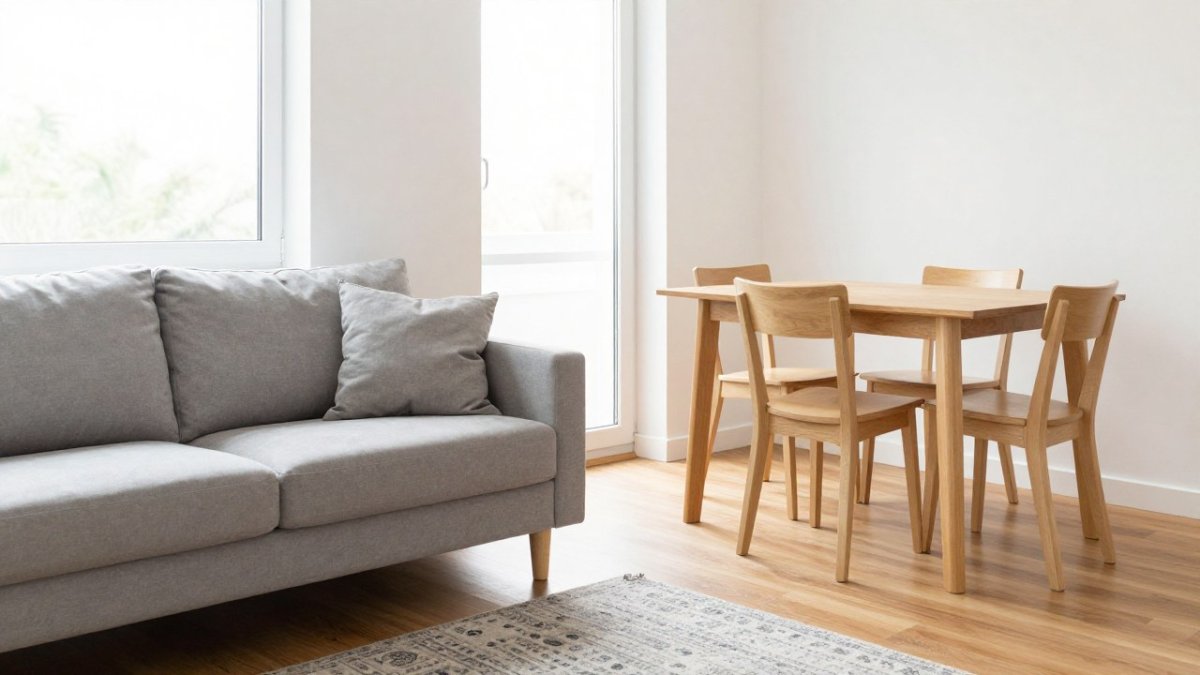
A room-by-room plan keeps the spend controlled. It also stops you buying three lampshades before you have bought a bed.
A Prioritised Shopping List
Most guides list rooms. Fewer tell you what to buy first. Use this order and you will never have a furnished living room and an unfurnished bedroom.
- Safety and compliance items, smoke alarms, carbon monoxide alarms where required, fire-resistant soft furnishings, and working white goods. These are not optional and should be bought before anything decorative.
- Sleep and hygiene essentials, bed frames, mattresses, wardrobes, chests of drawers, and a washable mattress protector for each bed.
- Living and dining essentials, a sofa, a dining table and chairs, and a rug for each main room.
- Kitchen basics, oven, fridge freezer, washing machine, and a kettle and toaster if the tenancy includes them.
- Bathroom basics, shower curtain or screen, mirror, and a bath mat.
- Optional upgrades, coffee tables, bedside tables, lamps, artwork, plants and cushions. Buy these only after items 1 to 5 are complete.
Realistic Budget Ranges by Room
Exact prices vary by region, condition and whether you buy new or second-hand, but the proportions below are a reliable planning tool. Treat them as a share of your total furnishing budget rather than fixed prices.
| Room | Share of budget | What drives the cost |
|---|---|---|
| Bedrooms | 30-35% | Mattresses and wardrobes are the biggest single items |
| Living and dining | 25-30% | Sofa quality and table size |
| Kitchen white goods | 20-25% | Whether appliances are already in place |
| Bathroom | 5-10% | Usually small unless a full refit is needed |
| Soft furnishings and decoration | 10-15% | Rugs, curtains, lighting, cushions |
Share of budget
If the property already has white goods, redirect that share to mattresses and seating. If it has none, white goods come first and decoration waits.
Living Room and Dining Area Essentials
The living room and dining area carry the first impression. A tenant decides whether a property feels like home within seconds of walking in.
Start with a sofa in a hard-wearing, neutral fabric. Add a dining table and chairs that will survive daily use, then a rug to warm the floor and soften noise.
Measure the room before you buy anything. A sofa that blocks the doorway is a sofa you will be replacing.
Bedrooms and White Goods
Bedrooms need a bed frame, a mattress, a wardrobe and a chest of drawers. Nothing else is essential.
Mattresses are where cheap becomes expensive. Buy the best mattress the budget allows and protect it with a washable cover.
White goods are non-negotiable. An oven, fridge freezer and washing machine must be in working order before a tenant moves in.
Watch out: do not buy a full set of matching bedroom furniture before you have confirmed the mattress size and the room dimensions.
Your Landlord Furniture Checklist: Essential vs Optional Items
A landlord furniture checklist separates what a tenancy legally needs from what merely looks nice. Buy the essentials first, then add optional items only where they help you let the property.
| Room | Essential | Optional |
|---|---|---|
| Living room | Sofa, rug, lighting | Coffee table, artwork, plants |
| Dining area | Table, chairs | Sideboard, table lamp |
| Bedroom | Bed frame, mattress, wardrobe, drawers | Bedside table, mirror, lamp |
| Kitchen | Oven, fridge freezer, washing machine | Microwave, kettle, toaster |
| Bathroom | Shower curtain or screen, mirror | Storage unit, bath mat |
Work down the essential column before you spend a penny on the optional one. Tenants forgive a missing coffee table. They do not forgive a missing bed.
Choosing Durable Furniture for Rental Properties
Durable furniture for rental properties is furniture that survives repeated use, cleans easily and can be repaired rather than replaced. Material choice matters more than brand name.
Replacement cost, not purchase price, often decides whether a piece is good value.
Look for:
- Solid wood or metal frames over particleboard that swells when wet.
- Tight-weave fabrics that resist staining and can be wiped or washed.
- Removable, washable covers on sofas and chairs.
A common mistake is buying furniture that is hard to clean. Light fabric and open shelving look good in a showroom and show every mark within a month.
Rental Property Furniture Ideas That Add Value Without Overspending
Rental property furniture ideas should raise what a tenant will pay without raising what you spend. The cheapest wins are usually soft furnishings, not furniture.
- A rug covers a tired floor and makes a room feel finished.
- Good lighting in every room, with warm bulbs, changes how a property photographs and feels.
- Curtains that fit the window properly make a room look cared for.
- A coat of neutral paint freshens a whole property for very little.
If you are furnishing rooms to attract professional tenants, design choices matter as much as price. Our guide on how to design HMO rooms that attract professional tenants covers layout and styling in more detail.
Watch out: do not buy decorative items before the essentials are in place. A beautiful lamp in a room with no bed is money spent in the wrong order.
Sourcing Second-Hand and Saving on Soft Furnishings
Second-hand sourcing can cut furnishing costs sharply, but only if you check condition, factor in delivery and know where to look. A free sofa that costs more to transport than it is worth is not a saving.
Where to Source Second-Hand Furniture
- Online marketplaces such as Facebook Marketplace, Gumtree and eBay are the fastest route to cheap sofas, tables and wardrobes. Quality varies enormously and collection is usually the buyer's responsibility.
- Charity shops and furniture reuse schemes often sell solid wood furniture at low prices and sometimes deliver for a small fee. Stock changes weekly, so check regularly rather than once.
- Auction houses and house clearance sales suit landlords furnishing several properties at once. You can buy in bulk, but you must inspect before bidding and arrange transport yourself.
- Landlord and trade networks are underused.
Cushions, throws and bedding are cheap new and carry hygiene concerns second-hand. Sofas, tables and wardrobes are where second-hand savings are largest.
Delivery Costs and Hidden Charges
Delivery can be an underestimated cost in second-hand buying. A sofa bought cheaply some distance away may cost more to move than it cost to buy.
Before agreeing a price, confirm:
- Whether the seller will deliver, and to which address.
- Whether delivery is to the door or inside the property.
- Whether the item must be disassembled to fit through doors or stairs.
- Whether there is a fee for stairs or a specific time slot.
For bulky items, a man-and-van service can be an option worth comparing with a courier. If you are furnishing multiple rooms, batch your purchases by area so one delivery run covers several items.
Safe Buying Checks
Before you pay, run through this list:
- Ask for photos of joints, legs and upholstery, not just the whole item
- Confirm the item comes from a smoke-free, pet-free home
- Check the frame for wobble and the fabric for stains or tears
- Ask whether the item has been stored in a damp garage or outbuilding
Upholstered furniture sold second-hand should still meet fire-safety requirements. If the label is missing or illegible, check before buying.
Saving on Soft Furnishings
Soft furnishings are where the biggest savings sit.
Buy neutral colours in bulk where possible. Matching curtains and rugs across rooms reduces cost and makes replacement simple when one item wears out.
If you are furnishing to a deadline, our guide on how to design HMO rooms that attract professional tenants shows how to apply these sourcing choices room by room.
Furnishing Different Rental Strategies and Tenant Types
Furnishing decisions should follow the tenant you want, not the furniture you like. A strategy that suits a family house fails in an HMO.
- HMO rooms: furnish each room fully and identically. Matching rooms let faster and photograph better.
- Family homes: go unfurnished or part-furnished. Families bring their own furniture and often prefer it.
- Short lets and professional lets: furnish fully, including soft furnishings and white goods, because tenants arrive with nothing.
- Portfolio landlords: standardise. Buying the same bed and wardrobe across properties cuts replacement costs and simplifies maintenance.
If you are still weighing up whether to furnish at all, our comparison of furnished vs unfurnished rentals: pros and cons sets out the trade-offs in full.
Book a Consultation to Furnish Your Rental Without the Hassle
Furnishing a rental is a project with a deadline, a budget and a tenant waiting at the end of it.
The operational side is where it gets heavy: sourcing, delivery, assembly, replacements, and the maintenance that follows.
You keep the asset. You can see our full management service to understand exactly what we take on, and read how landlords who chose peace of mind describe working with us.
To talk through your property and your options, book a consultation with our team.
Furnishing a rental well takes time, money and a clear plan.
Frequently Asked Questions
What furniture does a rental property need?
A standard furnished rental needs a bed and mattress in each bedroom, a wardrobe, a sofa, a dining table and chairs, and white goods including an oven, fridge freezer and washing machine. Use a landlord furniture checklist to separate essentials from optional extras like coffee tables, artwork and plants. Focus your budget on items tenants use daily and treat decorative pieces as the final layer once the core furniture is in place.
How can I furnish a rental property on a budget?
Start with a room-by-room plan and buy essential items first, then add decorative accents later. Choose durable materials that resist wear, source second-hand pieces where condition allows, and save on soft furnishings such as cushions, curtains and rugs. Avoid overspending on trend-led items that date quickly. A staged approach spreads the cost and lets you furnish a rental without compromising on the standard tenants expect.
Is it cheaper to rent or buy furniture for a rental property?
Buying usually costs less over the long term because you own the furniture and can replace individual items as needed. Renting furniture can suit a short-term let or a property you plan to sell, but ongoing payments add up and you never build any asset. For a long-term rental, buying durable furniture for rental properties is generally the more cost-effective route, especially when you factor in replacement costs over several tenancies.
Should landlords furnish a rental property fully or partially?
It depends on your target tenant. A fully furnished property suits short-term lets, students and professionals who want to move in with minimal outlay. A part-furnished property, with white goods and basic items but no soft furnishings, gives tenants room to add their own style and often attracts longer stays. Weigh the choice against your rental strategy, local demand and how much control you want over the property's condition.
