Last Updated: November 14, 2026
Quick Summary
A fire safety contractor for an HMO covers fire risk assessments, fire alarm servicing, fire door inspection, emergency lighting tests, extinguisher checks and remedial works, with records kept to show the landlord has met their duties. The right scope depends on the building's layout, occupancy and local licensing conditions, so the assessment should set out what is needed before any work is planned.
- The fire risk assessment must be carried out by a competent person with suitable training and experience.
- Alarm systems should be tested on a regular schedule, with each test and service visit recorded in a log.
- Fire doors on escape routes and bedrooms are usually the most urgent to inspect and repair.
- Compare at least two quotes and check each covers the same scope, including the written report and retesting.
Table of Contents
- What HMO Fire Safety Contractor Services Cover
- HMO Fire Risk Assessment: Scope and Who Carries It Out
- HMO Fire Alarm Requirements and Servicing
- HMO Fire Door Requirements and Inspection
- Choosing a Competent Contractor: Evidence to Request
- HMO Fire Safety Compliance Checklist and Record Keeping
- Booking Your HMO Fire Safety Review With Lord Panda Property
- Frequently Asked Questions
What HMO Fire Safety Contractor Services Cover
Fire safety contractor services for a house in multiple occupation (HMO) cover the inspection, testing and upkeep of the systems that protect residents. A fire safety contractor is a specialist who assesses a property, carries out or arranges remedial work and keeps records that show the landlord has met their duties. Lord Panda Property takes on this burden for landlords across the South and South West of England, so the day-to-day responsibility for compliance does not fall on the owner alone.
The scope usually runs across several linked areas. Landlords get the most value when the work is coordinated.
- Fire risk assessments and the written report that follows
- Fire alarm design checks, servicing and maintenance
- Fire door inspection and repair
- Emergency lighting testing
- Fire extinguisher and equipment checks
- Remedial works and a record of completed actions
HMO Fire Risk Assessment: Scope and Who Carries It Out
A fire risk assessment identifies the hazards in a property, the people at risk and the controls needed to reduce that risk. For an HMO, the assessment should reflect the higher number of occupants and the shared escape routes. The assessment must be carried out by a competent person, which in practice means someone with suitable training, experience and knowledge of fire safety in residential buildings.
The assessment should look at the layout of the building, the ignition sources, the fire detection arrangements and the means of escape. It should then set out what action is needed, who will take it and by when. A common mistake is treating the report as a document to file rather than a plan to act on.
Ask whether the assessor can show evidence of relevant training and whether they will explain the findings in plain terms.
HMO Fire Alarm Requirements and Servicing
The fire alarm system in an HMO must suit the size, layout and occupancy of the building. There is no single specification that fits every property, and the correct system type should be set out in the fire risk assessment before any installation or upgrade is planned. A fire alarm that is adequate for a small two-storey house with two occupants may fall well short for a three-storey building with several self-contained units and shared kitchens.
The right answer depends on the building, not on a generic template.
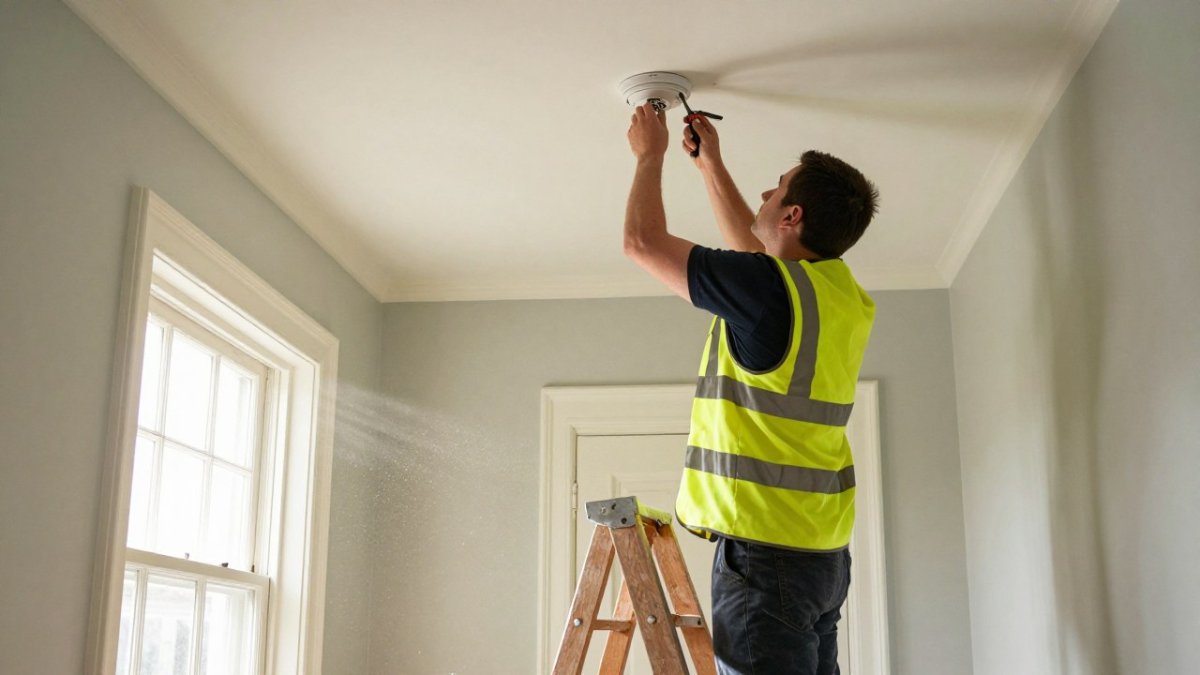
Servicing matters as much as installation. Alarm panels, detectors, sounders and call points should be tested on a regular schedule, and any faults should be repaired promptly. The exact intervals should follow the system manufacturer's instructions and the fire risk assessment, and the contractor should confirm the schedule in writing.
Keep a log of each test and service visit. Record the date, the person who carried it out, the devices tested, any defects found and the action taken. A log with gaps is almost as weak as no log at all, because it suggests the system has not been maintained consistently.
Watch out: a system that has been installed but never tested can give a false sense of security, and a panel showing a fault that is repeatedly silenced is a warning sign rather than a minor inconvenience. Make sure servicing is booked, recorded and followed up, not assumed.
Requirements also vary by property and by local authority. Licensing conditions, the layout of shared escape routes, the number of occupants and any guidance issued by the local fire and rescue service can all affect what is expected. Check the local licensing conditions that apply to your property in HMO licensing compliance for South West landlords. A contractor who works regularly in your area should be able to explain how those local factors apply to your building rather than quoting a one-size-fits-all specification.
HMO Fire Door Requirements and Inspection
Fire doors slow the spread of fire and smoke, giving residents time to escape. In an HMO, doors to bedrooms, kitchens and escape routes are often the most important, and the fire risk assessment should identify which doors are critical and what standard they need to meet. Not every door in the building will carry the same requirement, and treating them all as identical can lead to unnecessary expense in some areas and dangerous gaps in others.
Inspection should check the door leaf, frame, hinges, closers, intumescent strips and smoke seals. Each door should close fully and latch correctly, with no gaps that would let smoke through. Doors that have been painted over, fitted with a new lock, cut to fit a carpet or fitted with non-compliant ironmongery are often no longer effective. Where a door has been altered, it may need replacing or recertifying rather than simply being adjusted.
A practical inspection process moves through the door in a set order. Check the leaf for damage, warping or excessive gaps. Check the frame for soundness and correct fitting. Test the closer to confirm it closes the door fully and latches without assistance. Check the hinges for security and correct type. Confirm the intumescent strips and smoke seals are intact and not painted over. Check any glazing for correct fire-rated glass and beading. Record each defect with a photograph and a location so the remedial work can be priced and tracked.
Requirements vary by property and by local authority. Licensing conditions, the building's layout, the number of occupants and any guidance from the local fire and rescue service can all affect what is expected. A door that is acceptable in one property may not be acceptable in another with a different escape route or occupancy level. A contractor who works regularly in your area should be able to explain how those local factors apply to your building.
Prioritise remedial works by risk. Doors on escape routes and doors protecting sleeping residents are usually the most urgent. A door that does not close or latch is a live hazard and should be addressed before cosmetic issues. Keep completion evidence for each door, including the date, the work carried out, the parts used and photographs before and after. That record is what demonstrates the work was done to a proper standard if the property is later inspected.
Choosing a Competent Contractor: Evidence to Request
Choosing a contractor is one of the most important decisions in managing HMO fire safety. Competence is more than a low price. Before you commit, ask each contractor for:

- Evidence of relevant training and qualifications for the people who will visit your property
- Examples of previous reports for similar HMO properties, with names removed
- Public liability insurance details
- A clear written scope of work and a breakdown of costs
- A named point of contact for follow-up questions
Compare at least two quotes. Check that each one covers the same scope. A quote that looks cheaper may leave out remedial works, retesting or the written report. Ask how the contractor prioritises urgent actions and how they will help you plan the work within a realistic deadline.
Lord Panda Property is trusted by landlords across the South & South West of England, and our team can talk you through what to expect at each stage. The owner of Lord Panda Property was also featured in a property investment article in The Times, a sign of the attention the business has received for its work in the sector.
HMO Fire Safety Compliance Checklist and Record Keeping
Good records are the evidence that you have met your duties. Keep a single file for the property that contains the current fire risk assessment, the alarm and emergency lighting test logs, fire door inspection records, extinguisher service records and a list of remedial works with completion dates. For the wider obligations beyond fire safety, see a broader HMO compliance guide for landlords.
Use this checklist to keep track:
- Current fire risk assessment on file and reviewed after any change to the property
- Fire alarm tested and serviced on schedule, with logs kept
- Emergency lighting tested on schedule, with logs kept
- Fire doors inspected and any defects recorded and fixed
- Extinguishers serviced and signed off
- Remedial actions listed, assigned and closed with dates
- Tenants given clear information on escape routes and what to do in a fire
Review the file regularly rather than only when an inspection is due. A monthly check of the log is a simple habit that catches missed tests early.
Booking Your HMO Fire Safety Review With Lord Panda Property
If you are a landlord in the South or South West of England and want fire safety compliance handled properly, the next step is a conversation about your property. Lord Panda Property takes on tenant management, maintenance and compliance under a long-term arrangement, giving you a fixed monthly income with no voids and one point of contact for the work. You can also compare HMO management services for UK landlords in 2026 to see how different providers approach compliance alongside tenant management.
Book a consultation to review your current arrangements and find out where your fire safety record needs attention.
Frequently Asked Questions
Does an HMO need a fire risk assessment?
Yes. Landlords of houses in multiple occupation have a legal duty under the Regulatory Reform (Fire Safety) Order 2005 in England to make sure a suitable and sufficient fire risk assessment is carried out and kept under review. The assessment identifies hazards, people at risk and the measures needed to reduce risk. A competent contractor can carry out the assessment, record its findings and recommend remedial works. Ask for a written report that sets out each action, who is responsible for it and the timescale for completion.
Who can carry out a fire risk assessment for an HMO?
The person carrying out the assessment must be competent, which means they have the training, experience and knowledge to understand fire risk in shared accommodation. Many landlords use an accredited fire risk assessor or a contractor with a recognised competence scheme. Check that the individual is named on the report, that their qualifications are current and that they have experience with HMO layouts. Avoid anyone who cannot explain the difference between general and HMO-specific requirements.
What should landlords check before hiring an HMO fire safety contractor?
Start by asking for evidence of competence, professional indemnity insurance and proof of relevant training. Request a sample fire risk assessment so you can judge the depth and clarity of the report. Confirm whether the contractor covers fire alarms, fire doors, emergency lighting and fire extinguishers, or whether these will be subcontracted. Ask how remedial works are prioritised and how deadlines are managed. Compare written quotes line by line rather than only on headline price.
How often should fire safety measures in an HMO be checked?
The Regulatory Reform (Fire Safety) Order 2005 requires the fire risk assessment to be reviewed regularly and whenever there is a significant change to the property, its occupancy or its layout. Many landlords arrange routine checks of alarms, emergency lighting and fire doors at set intervals, recording each check in a log. Your contractor should give you a compliance calendar showing when each item is due, so nothing lapses between reviews.
