Table of Contents
- Understanding Your Legal Obligations for HMO Properties
- HMO Licensing Requirements Checklist
- HMO Fire Safety Regulations and Essential Measures
- HMO Property Inspection Schedule and Maintenance Tasks
- How to Manage Multiple HMO Properties Remotely
- Common Maintenance Failures and How to Avoid Them
- Maintaining HMO Property Standards: A Long-Term Strategy
- Frequently Asked Questions
Last Updated: 24 September 2026
Understanding Your Legal Obligations for HMO Properties
Your responsibility to maintain HMO property standards isn't optional, it's a legal requirement that protects your tenants and your investment. Houses in multiple occupation across the UK are subject to specific regulations designed to ensure safety, habitability, and proper management. These requirements vary depending on the size and type of your property, but the core principle remains constant: you must maintain standards that meet current legislation and local authority guidelines.
The Health and Safety at Work etc. Act 1974 places a duty on property owners to ensure the safety of anyone in or around the property. For HMOs, this extends beyond basic maintenance to include fire safety systems, structural integrity, and utilities management. Failing to meet these obligations can result in enforcement action, fines, or even prosecution. More importantly, it puts your tenants at genuine risk.
Understanding your obligations starts with knowing which regulations apply to your specific property. HMO licensing requirements, fire safety standards, and maintenance schedules all flow from your legal duties as an owner. The complexity increases when you're managing multiple properties remotely, which is why many landlords find professional support invaluable. At Lord Panda Property, we handle the compliance burden entirely, ensuring your properties meet all current standards whilst you receive predictable monthly income.
HMO Licensing Requirements Checklist
HMO licensing is one of the most critical compliance areas, yet many landlords underestimate its complexity. A mandatory HMO licence is required for properties with five or more occupants forming two or more separate households. However, some local authorities have additional licensing schemes for smaller properties, so checking your local authority's requirements is essential.
Your licensing checklist should include:
- Application submission: Complete the HMO licence application with accurate property details, occupancy information, and management arrangements
- Proof of eligibility: Demonstrate that the property meets basic safety standards before licence approval
- Management plan: Submit documentation showing how you'll manage the property, handle repairs, and respond to tenant complaints
- Landlord accreditation: Some areas require landlords to complete accreditation schemes or provide evidence of competency
- Licence renewal: Track renewal dates, licences typically last five years, and lapses can result in enforcement action
- Change notification: Inform your local authority of any significant changes to occupancy, management, or property condition
Many landlords struggle with HMO licensing requirements because regulations differ between local authorities. What applies in one area may not apply in another. The checklist approach helps ensure you're not missing critical steps, but it also requires ongoing attention as regulations evolve. This is precisely where remote management becomes challenging, missing a renewal deadline or failing to report a change can have serious consequences.
GOV.UK HMO licensing guidance provides the framework, but your local authority's specific requirements will be detailed on their website. Taking time to understand these upfront prevents costly mistakes later.
HMO Fire Safety Regulations and Essential Measures
Fire safety in HMOs is non-negotiable. The Regulatory Reform (Fire Safety) Order 2005 requires property owners to conduct fire risk assessments and implement appropriate fire safety measures (Business fire safety law and your duties). For HMOs, this means installing and maintaining fire detection systems, emergency lighting, and escape routes to standards that protect all occupants.
Your fire safety obligations include:
- Fire risk assessment: Conduct a formal assessment identifying fire hazards and the people at risk. Update this annually or when the property changes significantly
- Smoke and heat detection: Install detection systems on every level, particularly in communal areas and bedrooms. Test monthly and replace batteries annually
- Emergency lighting: Ensure all escape routes have functioning emergency lighting that activates during power failure
- Fire doors: Install fire-rated doors on escape routes and communal areas. These must close properly and not be wedged open
- Escape route maintenance: Keep all corridors, stairwells, and external exits clear of obstruction at all times
- Extinguishers and blankets: Provide appropriate fire extinguishers in communal areas and kitchens. Maintain and inspect annually
The complexity of fire safety regulations means many landlords underestimate what's required. A fire risk assessment isn't a checkbox exercise, it's a detailed evaluation that must identify specific hazards in your property and demonstrate how you're managing them. Tenants in HMOs are often more vulnerable to fire risk because they share communal areas and may be unfamiliar with escape routes.
According to the Fire Safety Institute's guidance on residential properties, properties with multiple occupants require more rigorous fire safety management than single-family homes. Regular testing, maintenance records, and tenant awareness all contribute to effective fire safety.
HMO Property Inspection Schedule and Maintenance Tasks
A structured inspection schedule is the backbone of efforts to maintain HMO property standards. Regular, documented inspections catch problems before they become serious and demonstrate your commitment to compliance. The frequency of inspections depends on your property's condition and local authority requirements, but quarterly inspections are a sensible baseline for most HMOs.
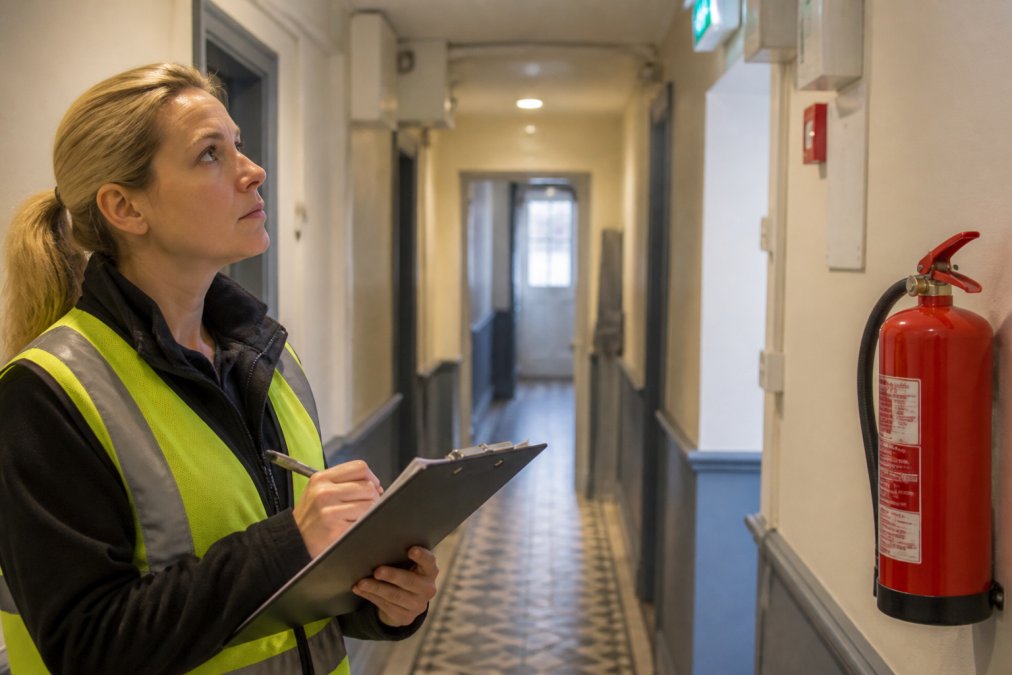
Your inspection schedule should cover:
- Structural condition: Check walls, ceilings, and floors for cracks, dampness, or deterioration. Document any issues with photographs
- Utilities: Test water pressure, check boiler operation, inspect gas connections for safety, and verify electrical systems are functioning
- Communal areas: Inspect hallways, stairwells, kitchens, and bathrooms for cleanliness, damage, and safety hazards
- Individual rooms: Where permitted, check tenant rooms for structural issues, ventilation, and heating
- Safety equipment: Test fire detection systems, emergency lighting, and extinguishers. Verify they're accessible and functional
- Pest control: Look for evidence of infestation and arrange treatment if necessary
- External areas: Inspect gardens, bins, and external structures for maintenance needs
Maintenance tasks flow directly from inspection findings. A damp patch discovered during inspection requires prompt investigation and repair. A faulty extinguisher must be replaced immediately. The key is creating a system where inspections lead to documented actions and follow-up verification.
Many landlords managing multiple HMO properties remotely find it difficult to maintain consistent inspection schedules. Coordination with tenants, arranging access, and ensuring thorough documentation all become challenging at scale. This is where professional property management provides genuine value, regular inspections happen on schedule, findings are documented systematically, and maintenance is coordinated efficiently.
How to Manage Multiple HMO Properties Remotely
Managing multiple HMO properties remotely requires systems that work without your physical presence. The operational burden grows exponentially with each additional property, particularly when properties are in different locations. Effective remote management depends on clear communication channels, reliable maintenance contractors, and documented processes.
Your remote management system should include:
- Tenant communication: Establish clear channels for reporting maintenance issues. Respond promptly and keep tenants informed of progress
- Contractor network: Build relationships with reliable, vetted contractors in each property's location. Brief them thoroughly on your standards
- Documentation system: Maintain digital records of all inspections, repairs, communications, and compliance documents. Cloud-based systems work well for remote access
- Regular reporting: Schedule periodic updates from on-site contacts or property managers summarising condition and any outstanding issues
- Emergency protocols: Establish clear procedures for urgent repairs, security issues, or tenant emergencies when you're not available
The challenge of managing multiple HMO properties remotely intensifies when you're juggling licensing renewals, fire safety compliance, maintenance scheduling, and tenant relations across several locations. Inconsistency creeps in, one property gets attention whilst another's inspection is delayed. Standards drift. Compliance gaps widen.
Lord Panda Property handles this complexity. Rather than trying to coordinate multiple properties remotely yourself, we manage the full operational burden, ensuring consistent standards across your HMOs. You receive fixed monthly income and the certainty that your properties meet regulatory requirements.
Common Maintenance Failures and How to Avoid Them
Most maintenance failures fall into predictable patterns. Understanding these mistakes helps you avoid them or recognise warning signs early. The most common failures reflect not negligence but the practical difficulty of managing properties remotely without professional support.
Delayed fire safety testing: Fire detection systems require monthly testing and annual maintenance. Many landlords skip this because it's not immediately visible to tenants.
Maintaining HMO Property Standards: A Long-Term Strategy
Maintaining HMO property standards isn't a series of isolated tasks, it's a continuous commitment to compliance and safety. A long-term strategy recognises that your properties are valuable assets that require consistent investment and attention. Short-term cost-cutting or deferred maintenance ultimately destroys asset value and creates legal risk.
Your long-term strategy should include:
- Annual compliance review: Each year, review all regulatory requirements for your properties. Local authority guidance changes, and new standards may apply
- Preventative maintenance: Invest in regular servicing and maintenance of key systems rather than waiting for failure. This costs less and prevents emergencies
- Tenant communication: Build relationships where tenants report issues promptly because they trust you'll respond. This catches problems early
- Professional support: Consider whether professional property management adds value. For multiple properties, it often does
- Record retention: Maintain comprehensive records of all work, inspections, and compliance activities. These protect you if questions arise
Frequently Asked Questions
What are the main HMO licensing requirements I need to meet?
Most HMOs with five or more occupants from separate households must be licensed by the local council. Your licensing requirements checklist should include: proof of financial viability, satisfactory management arrangements, suitable accommodation standards, and compliance with fire safety regulations. Check with your local authority, as some councils have stricter rules. Licensing typically lasts five years and requires renewal, so build this into your maintenance calendar.
How often should I inspect my HMO property to maintain standards?
A formal HMO property inspection schedule should include quarterly inspections of communal areas, monthly checks of fire safety equipment, and annual deep inspections of all rooms and systems. Between inspections, respond to tenant reports within 24 hours. Document every inspection in writing, noting any defects and remedial actions. This creates a compliance trail and helps you identify patterns of wear before they become serious breaches.
What fire safety measures are mandatory in an HMO?
HMO fire safety regulations require: working smoke alarms on every level, emergency lighting in communal areas, a fire safety risk assessment, clear fire exit routes with signage, and a fire action plan. You must also install fire doors to bedrooms and communal areas, maintain them regularly, and provide tenants with written fire safety information. Failure to comply can result in enforcement action and substantial fines from the local authority.
Can I effectively manage multiple HMO properties remotely?
Yes, but it requires systems. Use property management software to track maintenance tasks, inspections, and compliance deadlines. Schedule regular video inspections with tenants, establish clear reporting procedures, and appoint a local contact for emergencies. Remote management works best when you have reliable contractors on standby, clear tenant communication protocols, and automated reminders for statutory checks like gas safety and electrical testing.